Lorem ipsum odor amet, consectetuer adipiscing elit. Posuere nullam taciti laoreet blandit tortor litora, dictum ex? Aliquam aliquet euismod libero auctor, erat purus eros. Sodales elementum magna molestie morbi accumsan. Ipsum nunc neque consequat primis amet nibh purus. Quisque vel felis aliquet ac fusce parturient egestas consequat mattis. Quam potenti condimentum lobortis aptent nostra dis dictum mollis urna. Dictum class elementum tortor vivamus semper ad.
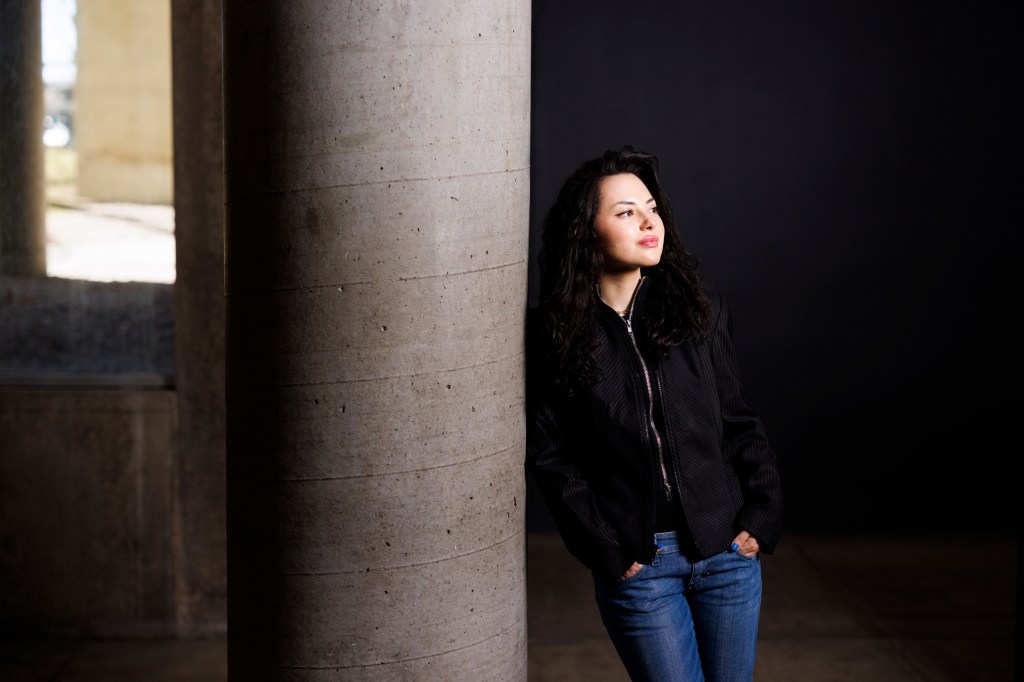
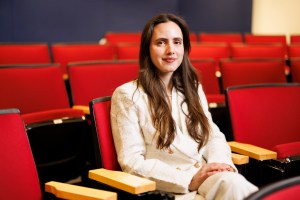
Daniela Solis. Daniela Solis ’26 is seen in a portrait in the Carpenter Center, where she took her first arts class. Solis, who is from Costa Rica and is concentrating in Government with a secondary in Economics, wants to pursue painting, an MFA, and government work after graduation. Veasey Conway/Harvard Staff Photographer
Harvard University
Lorem ipsum odor amet, consectetuer adipiscing elit. Posuere nullam taciti laoreet blandit tortor litora, dictum ex? Aliquam aliquet euismod libero auctor, erat purus eros. Sodales elementum magna molestie morbi accumsan. Ipsum nunc neque consequat primis amet nibh purus. Quisque vel felis aliquet ac fusce parturient egestas consequat mattis. Quam potenti condimentum lobortis aptent nostra dis dictum mollis urna. Dictum class elementum tortor vivamus semper ad.
When it comes to people, programs, and policies in education, Mica Pollock thinks we should talk about race more. And sometimes less. But mostly, Pollock, assistant professor of education at the Harvard Graduate School of Education (GSE), believes Americans need to learn to talk about racial issues in education better than we do.
Following are some of the incidents reported to the Harvard University Police Department (HUPD) for the weeks beginning July 18 and ending August 25. The official log is located at 1033 Massachusetts Ave., sixth floor.
The Harvard University Police Department (HUPD) is committed to assisting all members of the Harvard community in providing for their own safety and security. Harvards annual security report, prepared in compliance with The Jeanne Clery Disclosure of Campus Security Policy and Campus Crime Statistics Act (the Clery Act), is titled Playing It Safe, and can be found on the HUPDs Web site at http://www.hupd.harvard.edu/prevention_handbook.php.
Harvards alpine ski team will be under the tutelage of a new head coach for the 2004-05 season, as former UMass standout Justin Rouleau joins the Crimson coaching staff. Rouleau replaces Lisa Smyth, who was with the team for five years.
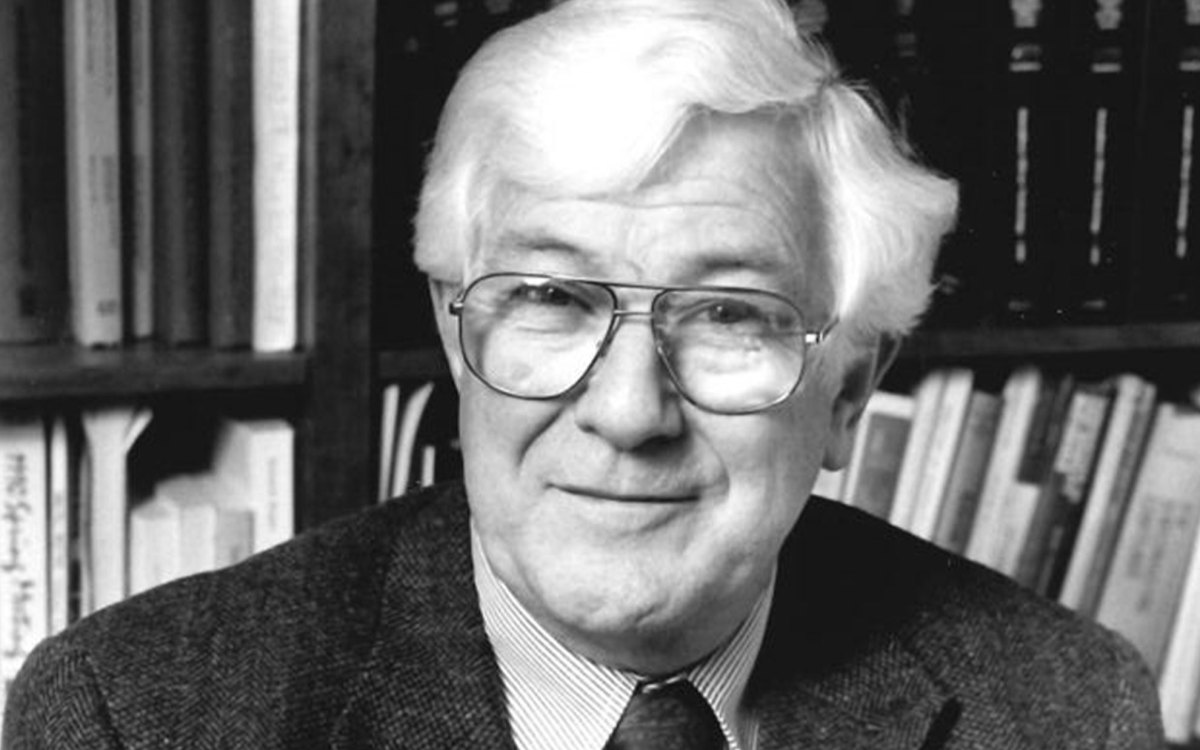
A memorial celebration honoring the life of Philip S. Holzman will be held on Oct. 23 at 1 p.m. at the American Academy of Arts and Sciences. Holzman, who died on June 1, was the Esther and Sidney R. Rabb Professor of Psychology Emeritus, and professor of psychology in the Department of Psychiatry, emeritus. A reception will follow.
Harvard Medical School (HMS) officially kicked off a new research center Monday (Aug. 23) focused on understanding and reversing the immune system dysfunction that both causes diabetes and that presents a hurdle to potential cures.
The third annual Its Movie Time at Harvard – a free outdoor film screening presented by President Lawrence H. Summers – will be held Sept. 26 at 7 p.m. in Tercentenary Theatre. The event is open to the entire University community and their families.
Robert C. Orr, executive director for research at the Belfer Center for Science and International Affairs at the Kennedy School of Government (KSG), left his post this month to become assistant secretary-general of the United Nations. In his new role, Orr is the UNs top official responsible for policy and planning, and the senior-most American policy-maker. Orr, who formally assumed this position on Aug. 16, will be working directly with the secretary-general in his office.
Harvard athletes strut stuff in Athens Harvard graduate Brenda Taylor ’01 placed seventh in a field of eight in the women’s 400m hurdles on Wednesday evening (Aug. 25) in Athens.…
As 30 research subjects seethed, scientists measured blood flowing between the thinking and emotional parts of their brains. What would be the difference between people who controlled their anger pretty…
Farrar to take helm of Harvard water polo Longtime collegiate water polo coach Erik Farrar will take the reins of Harvard’s men’s and women’s programs, it was announced earlier this…
HLS chooses architect for northwest corner Harvard Law School (HLS) recently announced the selection of Robert A.M. Stern Architects as the principal design firm to prepare a planning framework for…
Researchers have found a family of molecules that play a key role in the formation of synapses, the junctions that link brain cells, called neu-rons, to each other. The molecules initiate the development of these connections, forming the circuitry of the mammalian nervous system.
At the annual Mid-Summer Celebration of the 12 day camps run by Phillips Brooks House Association (PBHA), a student-led non-profit at Harvard College, Wednesday evening (Aug. 4), old-fashioned summertime fun took on a distinctly urban flavor. As campers from Boston and Cambridge ran sack races, tossed rings and softballs, slurped watermelon, and smeared their faces with equal parts cotton candy, face paint, and barbecue sauce, a sound system pumped out hip-hop and the Orange Line rumbled beneath Jamaica Plain’s Stony Brook Park.
Balloons waved, jazz standards played, and Cambridge seniors danced on the steps of the Memorial Church during Wednesday’s (Aug. 4) 29th Annual Senior Picnic in Harvard’s Tercentenary Theatre.
The world’s first quantum network, integrated with the Internet, is now operating in the Boston area. Its developers hope that the messages it sends will be secure from hackers and eavesdroppers for as long as imagination now extends.
Researchers at Brigham and Women’s Hospital (BWH) and Harvard Medical School (HMS) have found that the content of human DNA and genes, originally thought to be very similar among all human beings, differs significantly. This unexpected finding could one day provide researchers with the insight necessary to understand how disease development differs among individuals and could eventually lead to a deeper understanding of how to proactively prevent the development of particular diseases. Study results were published in Nature Genetics online on Sunday (Aug. 1).
Howard A. Frank, co-developer of the heart pacemaker and clinical professor of surgery emeritus at Harvard Medical School, died from complications of a stroke at his Brookline, Mass., home on June 27. He was 89.
The John Harvard Mall, a hilltop park in the Charlestown neighborhood of Boston, is now restored and designed to be safer for Boston residents and their children, thanks to a partnership between the city of Boston and Harvard University.
The impending retirement of 77 million baby boomers, if managed properly, can transform the nature of American society through an explosion in volunteerism that rejuvenates the societal ties that bind the nation together.
Ground was broken July 14 for the new long-term home of the Broad Institute at 7 Cambridge Center on the corner of Main and Ames streets. The institute will serve as the vital center of a relatively new collaboration intended to bring the power of genomics to bear on the understanding of disease and to accelerate the search for cures
Lakshminarayanan Mahadevan (Maha for short) studies the obvious but ignored – how do flags flutter, worms wiggle, fabrics fold. ‘There’s a certain joy in trying to discover the sublime in the mundane,’ says the Gordon McKay Professor of Applied Mathematics and Mechanics at Harvard University.
It’s like the chicken and egg question. Do we learn to think before we speak, or does language shape our thoughts? New experiments with five-month-olds favor the conclusion that thought comes first.
Researchers at the Harvard-affiliated Forsyth Institute and Massachusetts General Hospital in Boston and Universidade Federal de Sao Paulo (UNIFESP) in Brazil have successfully used tissue-engineering techniques to regenerate rat tooth crowns.
A 23,000-year-old hunter-gatherers’ camp submerged under the Sea of Galilee for millennia has provided Harvard researchers with new information about early human diets, showing that grains were staple foods 10,000 years earlier than previously thought and shedding new light on agriculture’s roots.
P S A are frightening letters for those diagnosed with prostate cancer, some 230,000 men every year. They stand for prostate-specific antigen, a protein the body secretes in excess when a man has the malignancy. It is used as a marker to both diagnose the disease and to detect its recurrence after surgery or radiation. Now, its rate of rise is seen as a marker of prostate-specific death.
Lisbet Rausing and Peter Baldwin have given $5 million to support the Harvard University Library’s Open Collections Program, which enables the University to make research materials from libraries across Harvard freely available over the Internet.

 Featured series
 Campus & Community
 Campus & Community
 Campus & Community
 Campus & Community
 Campus & Community